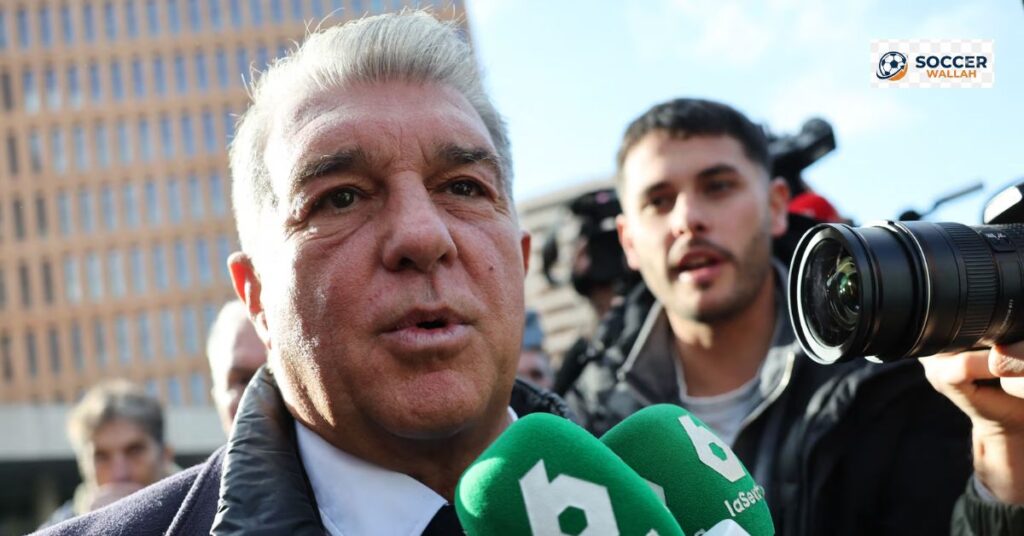
Joan Laporta has stepped down as FC Barcelona president, but this isn’t a retreat. It’s a calculated move, a required procedural step under club statutes, to allow him to run in the upcoming elections.
His resignation, effective this weekend (February 7-8, 2026), immediately kicks off the formal electoral process. A management committee now oversees club operations while Laporta prepares his campaign for a third non-consecutive term.
Laporta is looking to solidify his leadership as the club navigates a critical period. He’s up against opponents like Víctor Font and three others. But the timing seems pretty strategic, considering where Barca sits right now.
The Electoral Gauntlet and Barca’s Strong Standing
The presidential elections are set for March 15, 2026. This isn’t Laporta’s first rodeo. He served his first term from 2003 to 2010, a golden age for the club, then returned in 2021 with a landslide victory during a crisis. Now, he’s aiming for more time at the helm, and the team’s current form gives him a strong hand.
Barcelona leads LaLiga, a point clear of Real Madrid. They’ve played 23 games, with 19 wins, 1 draw, and 3 losses, scoring 58 points. That’s a good record, especially with a +40 goal difference. They’re also heading into the Copa del Rey semifinals against Atlético Madrid, keeping the momentum going. And you know, this on-field success just makes his political maneuver more interesting.
Main campaign issues are shaping up to be the Camp Nou redevelopment, targeted for completion by 2027, and the club’s financial strategies. Laporta, speaking on his tenure, claimed,
“We had to act boldly and quickly.”
He’s positioning himself as the only candidate who can deliver the Camp Nou project on time without messing up team competitiveness. It’s a big promise, but he’s got a history of making big things happen.
Super League Exit and Strategic Decisions
Just last week, Barcelona made headlines by withdrawing from the European Super League project. This left Real Madrid as the last remaining participant. Laporta didn’t hold back on why, saying it was
“a project that had been falling apart.”
He even mentioned tensions with Real Madrid and wanting to reconcile with UEFA and the European Club Forum. That’s a significant shift in direction, and it shows his willingness to make tough calls.
His recent interview, reflecting on his five years back in office, touched on some important sporting decisions. He talked about Hansi Flick, Deco, Xavi, Koeman, and the importance of La Masia. Laporta seems to really rate Flick, noting,
“He perfectly understands what the club is all about.”
These kinds of comments set the stage for his re-election platform, highlighting stability and a clear vision after the club’s 2021 crisis. There were even talks about Lionel Messi coming back, which just shows the scale of his ambitions.
The Rules of Engagement and What’s Next
This “resignation” is all above board, following article 42.f of FC Barcelona’s statutes. It ensures a fair fight, too. Electoral rules prevent an incumbent president from using club resources for campaigning.
This means Laporta can’t leverage the team’s current success or club facilities directly for his election bid. It’s a level playing field, at least on paper.
Barcelona’s goalkeeper, Marc-André ter Stegen, had surgery recently. No word on his recovery timeline, but it’s a side note in a busy period. The club is focused on keeping that LaLiga lead and pushing for the Copa del Rey.
It’s a balancing act for the club, maintaining focus on the pitch while the political landscape shifts around them. But Laporta’s move here is a calculated risk, a declaration of intent.
He wants more time, and he thinks he can get it, especially with the team playing as well as they are. Fans will be watching closely as the campaign heats up between now and March 15.